Johnny’s black-and-red skull motorcycle gloves
The CallerJohnny’s black-and-red skull motorcycle gloves are both a conspicuous possession and a practical clue in the investigation of the pranks terrorizing the community. Lost at a Spar checkout, they give witnesses a detail they can remember, allow Jacob Skarre to arrange a watch for the person who returns, and later become a visible sign of how close the police have come to Johnny Beskow. Their importance lies not in any demonstrated forensic test, but in the chain of recognition and pursuit they set in motion.
Appearance and Initial Clue
The gloves are black leather, marked by red skulls embossed near the top. They fasten at the wrist with a large button and have a silk-like inner flap bearing the label Made in China. Britt, an employee at the Spar supermarket by Lake Skarve, describes them as black with red skulls and memorable precisely because they are unusual. When Britt offers them to Skarre, he tries one on and finds it too small; Ella Marit judges their owner to be a thin teenager. Her recollection of a dark, handsome boy with long hair adds a witness’s impression, though the gloves themselves supply the more distinctive detail.
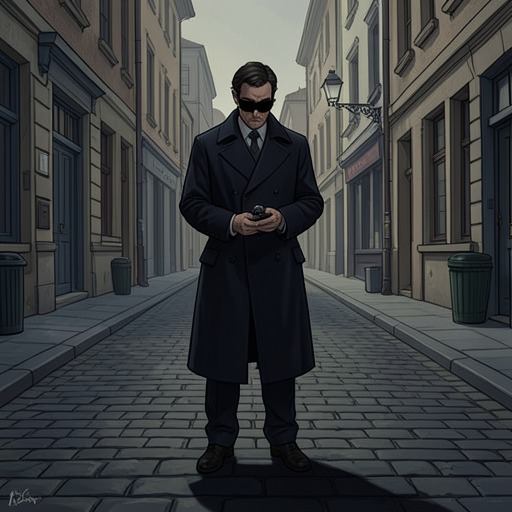
That detail links the store’s memory of a transaction to the investigation. Ella Marit recalls a boy buying a block of frozen ox blood while wearing a helmet, which prevented her from examining his face closely. She remembers the gloves instead. She also recalls that he left them on the conveyor belt. The account does not establish that the gloves alone prove who bought the blood, but they give the police a specific, recognizable object around which they can organize further observation.
The connection matters in the context of the blood-drenched baby incident. At the outset, Konrad Sejer considers how an intruder might have carried blood into Bjerketun from nearby Askeland, perhaps through the trees, and wonders where the blood came from. The shop employees’ recollection of a purchase of frozen ox blood offers a concrete investigative lead in that search. The gloves make the recollection usable: unlike a helmet-obscured face, their skull design is unusual enough to stay in a witness’s mind.
From Lost Property to Police Watch
After Britt reports the gloves, Skarre asks the employees to keep them at the store and put up a notice saying that a pair of gloves has been found. He gives them a coordinated plan for the owner’s return. One employee is to retrieve the gloves and keep him occupied; the other is to go outside, look for his bike, and record its registration number. They are to contact him immediately. A routine act of returning lost property is thus turned into a discreet attempt to identify the visitor and his vehicle.
Johnny eventually sees the notice through the shop window. His moped has failed to start, its tank nearly empty, and he has no money for petrol; walking toward the shop, he remembers losing the gloves and decides to ask for them. Before entering, he hesitates, feeling that something is wrong. Inside, the employees’ behavior confirms his suspicion: one disappears into the back room while the other searches the car park. He realizes she is looking for his moped. Once the gloves are handed back, he bolts from the shop and heads toward Bjerkås. The object has served its purpose for the police even though Johnny escapes before the planned registration check is completed: his response reveals that the store’s notice and staff have become part of the investigation.
Recognition and Its Limits
The gloves return later as a material reminder of that near-capture. During a conversation with Sejer, Johnny takes them from his pocket and sets them on his lap. Sejer recognizes their skull design and tells him that he had slipped through the police’s fingers. The gloves make the earlier store encounter present again: they are no longer merely something Johnny forgot at a checkout, but the object through which the police traced a path toward him.
Johnny is willing to discuss his conduct in broad terms. He admits that frightening people had been fun and describes the pranks as a game, saying he never meant to hurt anyone. But he denies being at Bjørn Schillinger’s place or letting the dogs out. That distinction is important to what the gloves can and cannot establish. They connect Johnny to a line of inquiry and help identify him as the prankster; they do not, in the evidence presented here, settle responsibility for the dog attack. Johnny’s possession of them at the meeting strengthens their role as a recurring clue, not as proof of every accusation made against him.
The Object in the Aftermath
The gloves’ significance develops through a sequence of ordinary physical acts: they are left on a conveyor belt, held in a staff room, displayed through a notice, retrieved, carried away, and finally placed on Johnny’s lap. Each change of setting changes what the object means. At the store they are lost property; to the employees they are a memorable identifying feature; to Skarre they are the basis for a trap; to Johnny they are a reason to return and then flee; in Sejer’s office they become a pointed reminder that the investigation has found him.
The wider response to Johnny’s pranks also shows why a clue of this kind carries weight. People have begun giving him audacious nicknames, and Johnny relishes the attention, treating the public reaction as acknowledgment of his self-made notoriety. In that atmosphere, the gloves offer something different from a label or rumor: a concrete object attached to a witnessed encounter. Yet the story preserves the difference between being identified as the prankster and being proved responsible for every subsequent harm. Johnny cannot be held in custody because he is a minor, so he reports to the police station three times a week and regularly speaks with Sejer over mineral water. The gloves, returned after briefly leading the police toward him, remain a compact record of that pursuit—and of the limits of what one clue can prove.